A yellow sign goes up on the boulevard before anything else happens. It lists a phone number, a permit holder's name, and the City of Edina's Construction Complaint Hotline. Somewhere within the next few weeks, the permit holder has to sit down with everyone who owns property within 300 feet and walk them through what's coming: the demolition date, the excavation schedule, where the dumpster will sit, which side of the street loses parking. Only after that meeting happens can the crew that's been idling show up with the excavator.
This is Edina's Construction Management Plan, which sets requirements for managing nearby redevelopment projects. The city's residential redevelopment page lays out the rest of the mechanics: work is prohibited outside of 7 a.m. to 7 p.m. on weekdays and 9 a.m. to 6 p.m. on Saturdays, banned entirely on Sundays and major holidays, and the City of Edina says that if a permit sits untouched for 180 days with no inspection logged, it expires.
None of that is unusual policy for a built-out inner suburb. In certain pockets of Edina, the land can be the primary value, and a buyer may plan to remove the existing house before building on the parcel.
Why the Land Started Outbidding the House
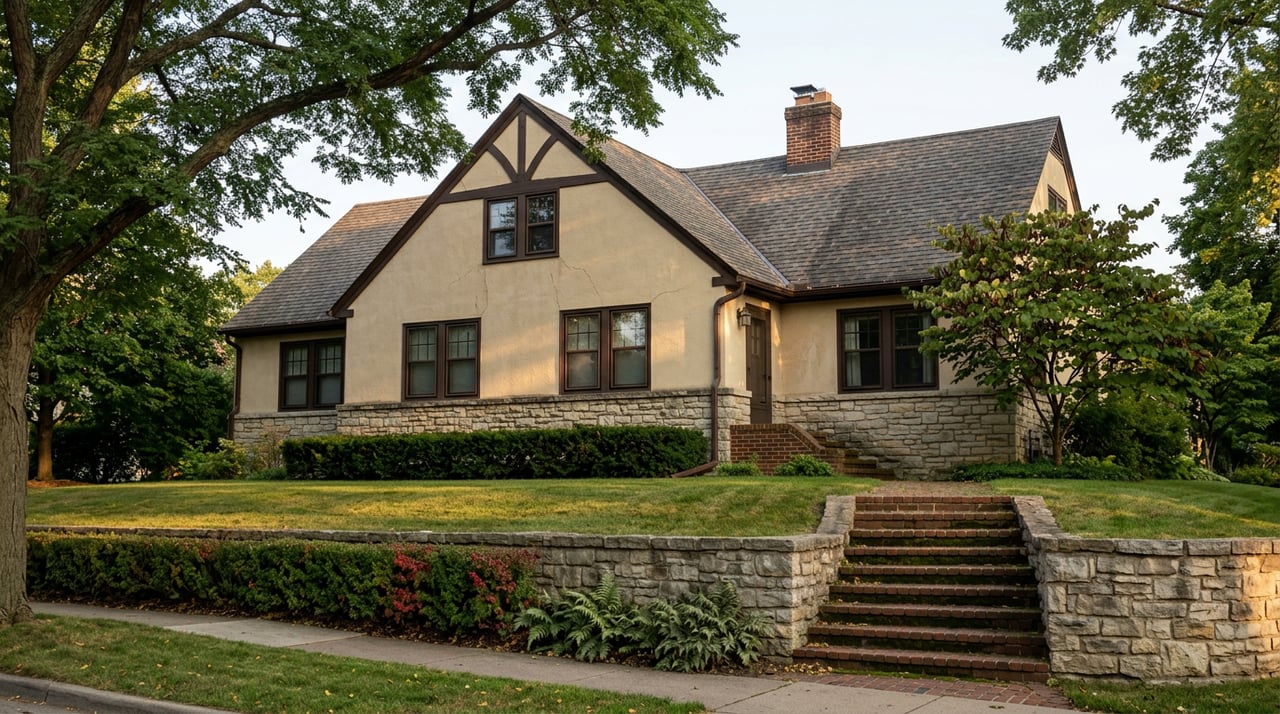
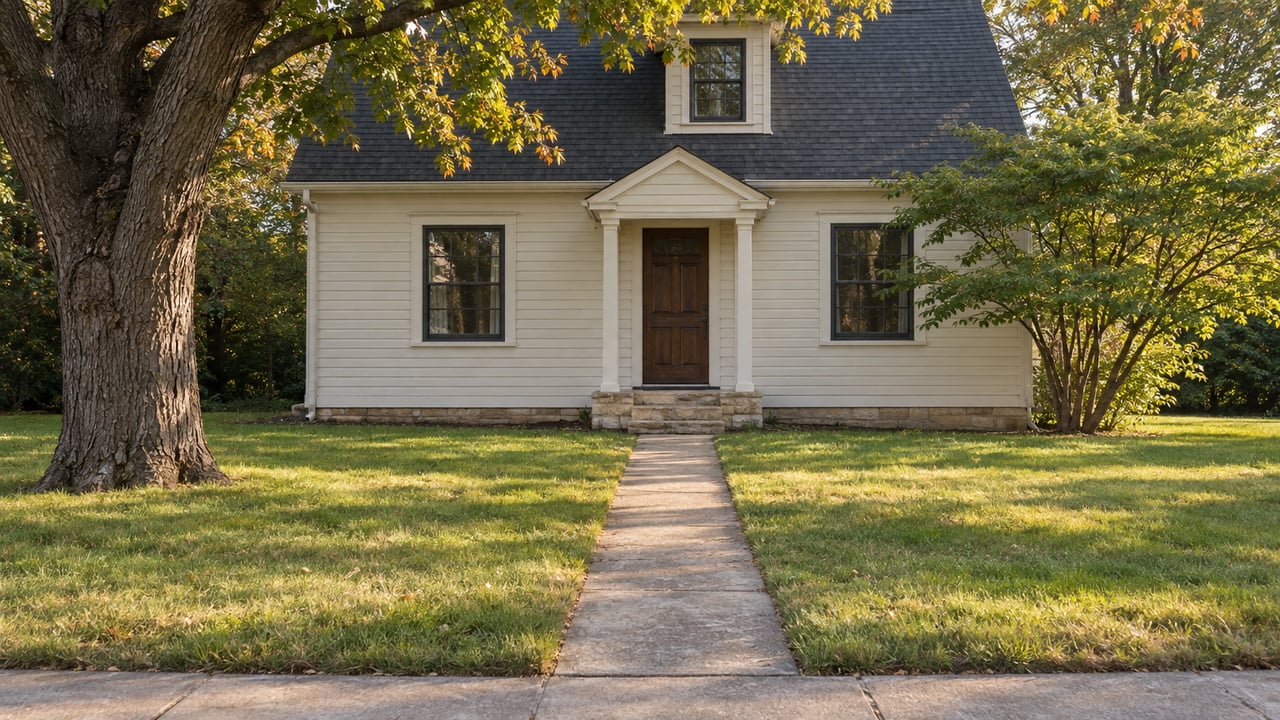
A large share of Edina's original housing stock went up in the 1940s and 1950s: modest Cape Cods and single-story ramblers built for a smaller, single-income household and a different relationship to square footage. Those homes were never designed to hold the layout today's buyers ask for, an open kitchen, a primary suite with its own bath, a second story with bedrooms stacked over a mudroom. Retrofitting that floor plan onto a 1948 rambler footprint usually costs more than starting over, and it still ends with a house shaped like a compromise.
That's the mechanism. Once a neighborhood's original stock ages past the point where renovation produces a floor plan buyers actually want, the calculation flips. The land, its width, its depth, its tree cover, its proximity to a park or a walkable commercial strip, becomes the asset buyers are underwriting. The house becomes a line item on the demolition budget.
You can see this logic written directly into how some parcels get marketed, with the land emphasized rather than the existing structure.
The Streets Where the Math Already Flipped
This crossover hasn't happened evenly across Edina, and that unevenness is the part worth understanding before you start comparing listings by price per square foot.
Pamela Park has become something close to ground zero for the city's rebuild activity. Backing up to a 62-acre park with soccer fields, tennis courts, and a wetland area, lots in this pocket have been selling as build-to-suit packages in the $1.4 to $1.7 million range, with the existing home already slated for removal before a buyer even closes. Morningside functions on the same logic at a different scale: a walkable, tightly platted grid of infill lots where narrow older homes keep giving way to two-story rebuilds sized to fit the block. Arden Park and parts of Parkwood Knolls show the same pattern, driven by original lot sizes and housing stock that support replacement construction.
Concord sits a notch above that, close enough to 50th & France that a rebuilt five-bedroom home on a classic tree-lined street can carry over 4,200 finished square feet and still read as walkable rather than isolated. A lot backing directly onto Interlachen Country Club's golf course, at just under an acre, gets marketed on the premium of what surrounds it rather than what sits on it. None of these are edge cases. They're the neighborhoods where the land-over-house math has become the default assumption baked into how properties get priced and shown.
The Blocks Where It Hasn't
Rolling Green and the Country Club District tell a different story, and the difference matters if you're comparing two Edina addresses that look similar on paper.
In these areas, mature landscaping and estate-style lot placement mean the existing structure often still holds real value on its own terms. A well-sited older home on a lot with established trees and a considered footprint can outperform a rebuild in long-term value, because the thing buyers are paying for isn't just square footage, it's how the home already sits on its site. That's a harder thing to replicate than it is to demolish and rebuild, which is exactly why these neighborhoods require what one local builder's site calls site-specific evaluation rather than a blanket teardown assumption. A rebuild that would be the obvious economic move in Pamela Park can be the wrong move on a Rolling Green lot where the original siting is doing work a new foundation can't easily reproduce.
The practical upshot: two Edina addresses with nearly identical lot sizes and nearly identical asking prices can be answering completely different questions. One is asking what you'll pay for the dirt. The other is asking what you'll pay to keep something that already works.
The Recycling Option Almost No One Chooses
There's a detail buried in Edina's redevelopment page that most teardown conversations skip entirely. Hennepin County offers grants to homeowners and developers who deconstruct a building rather than demolish it, salvaging lumber, fixtures, and materials instead of sending them to a landfill.
Deconstruction takes longer than demolition and costs more upfront in labor. For a buyer whose whole plan depends on getting an excavator on site the week after closing, that tradeoff rarely pencils out. But for a seller weighing how a property gets marketed, or a buyer who cares about where the materials from a 1948 rambler actually end up, it's a real option sitting in the same city process as the standard teardown path, not a hypothetical one.
Reading a Listing Like the Land Is the Point
Once you know which mechanism is in play, a listing's language starts reading differently. A description that leans on kitchen finishes and primary suite details is usually still selling the house. A description that emphasizes lot width, tree coverage, park frontage, or proximity to a specific country club or creek may indicate that the land is an important part of the property's appeal, while the photos can help buyers assess the existing home.
That distinction changes what due diligence actually looks like. On a house-is-the-product listing, you're evaluating condition, systems, and layout. On a land-is-the-product listing, you're evaluating setbacks, grading, tree preservation requirements, and how long the Construction Management Plan process will realistically add to your timeline before a single wall comes down. Those are different inspections, different negotiations, and in some cases different offers entirely, even when the two listings sit three blocks apart and share a zip code.
Does an older home in Edina automatically mean it's a teardown? Not automatically. Rolling Green and the Country Club District are the clearest examples of neighborhoods where an older home's siting and landscaping can still carry more value than a rebuild would.
How much time does the neighbor meeting requirement actually add to a project? The city doesn't publish a fixed number, since it depends on how quickly a permit holder schedules the meeting and how much feedback follows, but it happens before demolition can begin, which means it's a step to build into your timeline rather than a surprise to react to.
Is deconstruction ever worth it over standard demolition for a typical Edina teardown? It depends on your timeline and your priorities. Hennepin County's grant programs make deconstruction more affordable than it would otherwise be, but the slower pace means it fits better for sellers or buyers who aren't racing to get a foundation poured the following month.
If you're looking at an Edina property and aren't sure how much of its value is in the existing house versus the land, that's worth a conversation before you write an offer, not after. Josh Zuehlke & Co walks buyers and sellers through exactly this kind of read on a listing, lot by lot and block by block.
This article is general information, not legal, tax or financial advice. Consult a qualified professional about your situation.